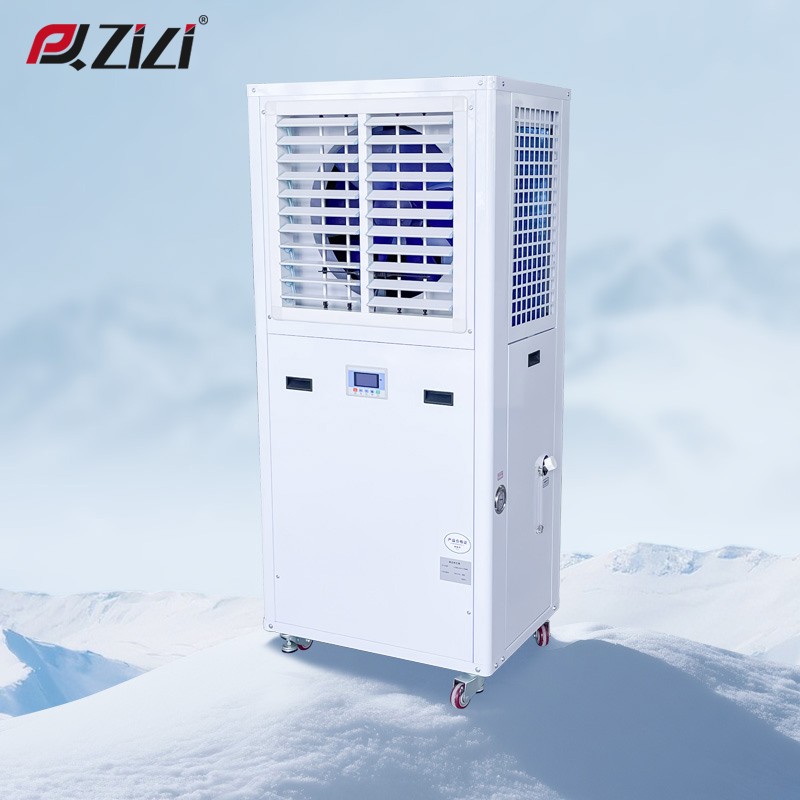
Louvered Air Conditioner Specifications
|
|
Air Conditioner Vertical Shutter Type
|
|
Type
|
5HP-S
|
7HP-S
|
7HP-D
|
10HP-D
|
|
Rated Power(KW)
|
4.6
|
6
|
5.93
|
8.18
|
|
Rated Current(A)
|
8
|
10
|
10
|
16
|
|
Compressor Power(KW)
|
3.75
|
5.25
|
5.25
|
7.5
|
|
Refrigerating Capacity(KW)
|
18
|
25
|
30
|
36
|
|
Refrigerating Capacity(BTU)
|
60000
|
85000
|
100000
|
120000
|
|
Cold Air Outlet(MM)
|
56*54
|
56*54
|
44*111
|
44*111
|
|
Motor Power(KW)
|
0.09
|
0.25
|
0.18
|
0.18
|
|
Wind Blowing Distance(M)
|
10~15
|
|
Temperature Control Range(℃)
|
13~30
|
|
Cool Square(M²)
|
150-200
|
150-300
|
300
|
400-450
|
|
Refrigerant
|
R410A
|
|
Equip Size(MM)
|
80*60*168
|
80*60*168
|
84*73*201
|
84*73*201
|
|
Weight(KG)
|
170
|
180
|
230
|
240
|
|
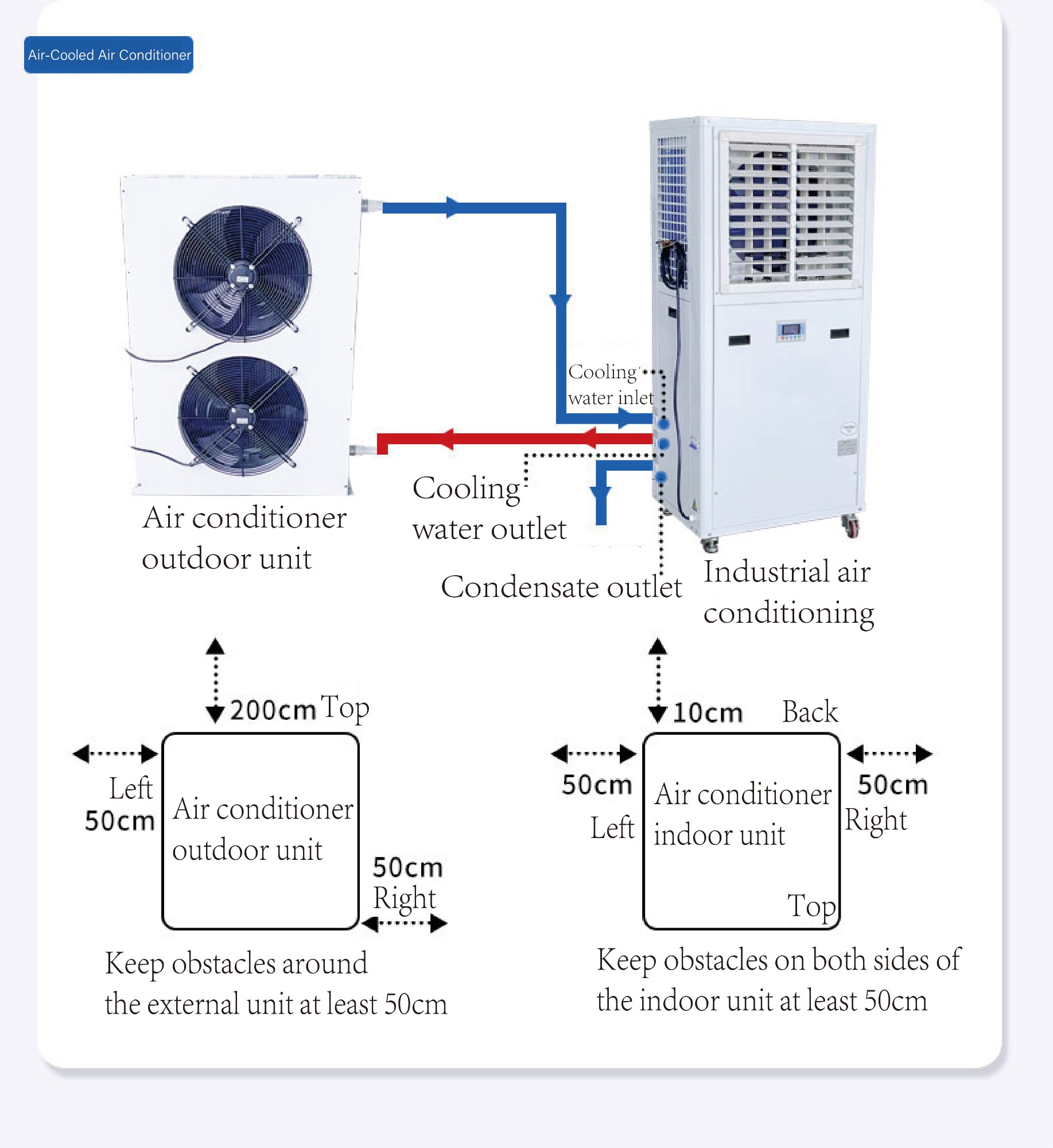
Outdoor unit
|
Motor Power(KW)
|
0.5
|
0.5
|
1
|
1
|
|
Air Volumev(M³/H)
|
10300
|
10300
|
10300
|
10300*2
|
|
Ambient Temperature(℃)
|
≤40
|
|
Size(CM)
|
74*22*107
|
84*22*117
|
84*22*117
|
(84*22*117)*2
|
|
Weight(KG)
|
35
|
40
|
40
|
35*2
|
Air Conditioning Product Introduction
Applications and Features of Industrial Louvered Air Conditioners
Key Features
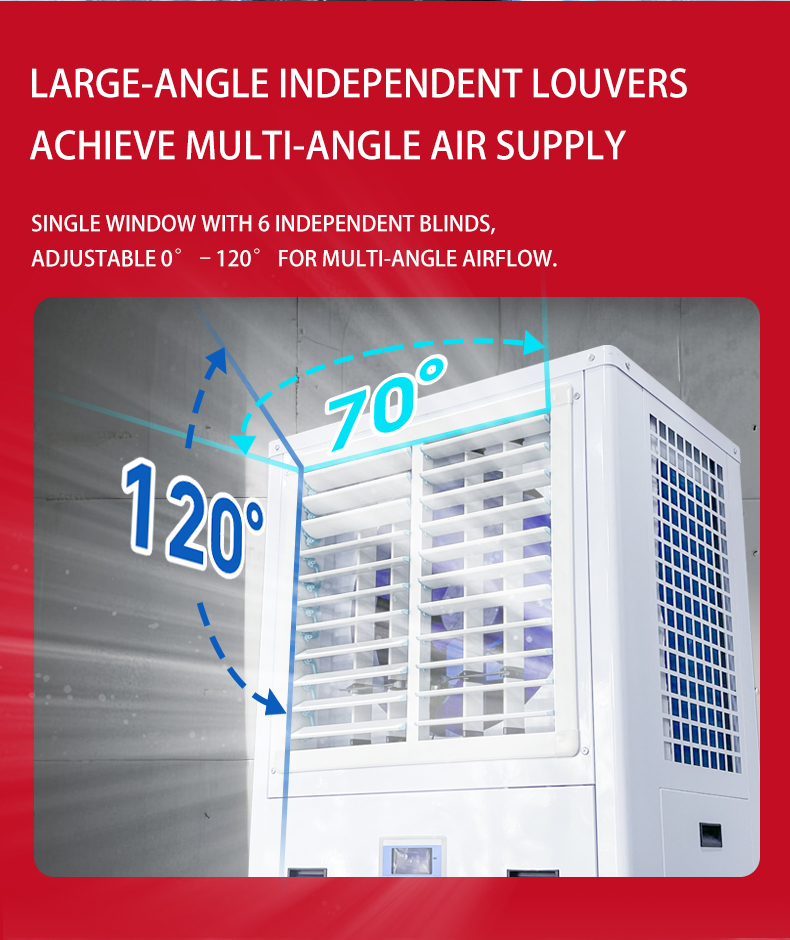
Long Air Supply Distance and Wide Coverage:This is its most prominent advantage. While standard air conditioners typically have an air supply range of 5–8 meters, industrial louvered air conditioners—thanks to high-power fans and optimized air duct designs—can project air over distances exceeding 26 meters, effortlessly reaching the deepest corners of large factory floors. Furthermore, many models support a 130° wide-angle airflow, effectively eliminating airflow "dead zones" and ensuring uniform cooling throughout the entire space.
Flexible Installation and Convenient Maintenance:Given that factories typically feature high ceilings and limited suspended ceiling structures, most units of this type are designed as floor-standing cabinet units; they can be placed directly on the ground and installed flush against a wall. This eliminates the need for wall drilling or the installation of complex ceiling mounts—common requirements for residential air conditioners—making the initial installation process simpler, as well as significantly facilitating future relocation or maintenance work. Of course, suspended (ceiling-mounted) models are also available to meet specific requirements.
Energy-Efficient and Cost-Effective:Factory air conditioning systems often operate for over a dozen hours—or even 24 hours—a day, making electricity costs a significant expense. Industrial louvered air conditioners typically employ a combination of energy-saving technologies. For instance, the use of DC inverter compressors allows the unit to automatically adjust power output based on the actual workshop temperature, thereby avoiding the waste associated with constant full-speed operation; this feature alone can yield energy savings of 25%–40% compared to traditional fixed-frequency air conditioners. Additionally, some models incorporate evaporative condensing technology—utilizing water evaporation to assist in heat dissipation—which can further reduce energy consumption by another 15%–20%.
Robust, Durable, and Highly Adaptable: Industrial environments are often harsh, potentially involving high temperatures, airborne dust, and corrosive gases. Consequently, these air conditioning units are designed with durability as a primary consideration. For example, models intended for chemical workshops often feature corrosion-resistant electrical circuitry to protect internal components from corrosive gases.
Furthermore, their external casings and air duct structures are built to be exceptionally sturdy, enabling them to withstand prolonged, heavy-load continuous operation.
Extensive Optional Features:To address the specific requirements of diverse operational scenarios, these air conditioning units offer a wide array of optional features. For instance, they can be equipped with a dual-stage filtration system (comprising primary and medium-efficiency filters) to provide cleaner air in workshops with specific air purity standards—such as those found in electronics manufacturing or food processing plants. Additionally, in regions with arid climates, units can be fitted with wet-film humidifiers to prevent the buildup of static electricity within the workshop caused by excessive dryness.
Primary Applications
Industrial louvered air conditioning systems boast an extremely broad scope of application; essentially, wherever large-scale air conditioning is required, these units can be found:
Manufacturing Facilities:This represents the most common application scenario, encompassing production workshops across various sectors such as automotive manufacturing, electronics, textiles, hardware, injection molding, glass production, and furniture manufacturing. These environments are typically characterized by a high density of machinery, significant heat generation, and a large workforce, thereby necessitating powerful and effective cooling solutions.
Specialized Industrial Environments:Facilities such as fine chemical plants, metallurgical sites, pharmaceutical manufacturing plants, and laboratories—which impose stringent requirements regarding environmental temperature, humidity, and air purity—rely on industrial louvered air conditioning to provide stable and reliable climate control.
Warehousing and Logistics Centers:Large-scale warehouses and logistics sorting hubs require precise control over temperature and humidity levels to prevent goods from sustaining damage due to moisture or spoilage.
Large-Scale Public and Commercial Venues:Examples include sports stadiums, exhibition halls, airport terminals, transportation stations, and large retail complexes—areas typically characterized by high ceilings and expansive open spaces.